Posted in productivity, writing habits

Best Google Chrome Plugins for Writers

Writers today face many distractions that can derail productivity and impact the writing process. With so many websites, apps, notifications, and rabbit holes competing for our attention, it can be challenging to focus and make progress on writing projects. Fortunately, Google Chrome offers some handy extensions that can help writers take control of their environment, build better habits, and optimize their workflows.

In this post, I’ll highlight four of my favorite Chrome extensions for improving focus, tracking time, limiting distractions, and catching errors during the writing process. Whether you struggle with procrastination, losing time to research tangents, or just need help enforcing good writing habits, these tools can help you manage your online time and energy more effectively. Read on to learn how StayFocusd, WebTime Tracker, Unhooked, and Grammarly make me a more productive and proficient writer.

1. StayFocusd

StayFocusd is a Chrome extension that helps people stay focused on work by blocking or limiting access to distracting websites. Some of the ways StayFocusd helps keep me on my writing task include:

  • Block distracting websites – Writers can use StayFocusd to block time-wasting sites like social media, news, YouTube, etc. during writing time. This removes distractions.
  • Set writing time limits – StayFocusd allows setting daily time limits for websites. Writers can use this to define writing goals and limit time on non-writing sites.
  • Focus during writing sessions – With distracting sites blocked, writers can get into a flow state and avoid wasting time toggling between apps/sites.
  • Limit Internet research – The blocking features can also limit time spent going down research rabbit holes online, keeping writers focused.
  • Prevent procrastination – StayFocusd is useful for procrastinators – blocking sites makes it harder to procrastinate on writing work.
  • Set nuclear option for writing – The “nuclear option” blocks all sites except a whitelist. Writers can whitelist only writing apps/sites to force focus. Combine it with the Pomodoro Technique for extra focus.

StayFocusd gives writers more control over their environment and habits to minimize distractions and stay focused on writing. For me, it’s an indispensable productivity tool. I use it to block social media, news sites, and online retail, but you can personalize it for your own biggest time sucks.

2. WebTime Tracker

WebTime Tracker is a Chrome extension that tracks how much time you spend on websites and applications. I find it helpful to track my time especially when doing background research for writing projects.  Its key features for writers include:

    • Track time spent writing – The extension can track time spent in word processors/writing apps to help writers know how much actual writing they are getting done each day.
    • Identify productive writing times – The productivity reports can show writers when their peak writing times are based on when they have longer writing sessions. This allows for optimizing schedules.
    • Track research time – Time spent researching and gathering material can also be tracked separately from writing time to analyze efficiency.
    • Analyze habits – Writers can look at usage trends to see if they are procrastinating, identify what steals their time, and adjust their habits accordingly.

    WebTime Tracker aims to make you more aware of how you spend time online so you can focus on being productive and minimize distractions.

    3. Unhook

    Unhook is a plugin that works with YouTube that I only recently discovered. I was reluctant to use Stayfocusd to set limits on YouTube because I used it for exercise and medication, but kept getting stuck in video rabbit holes. The website works hard on its algorithms to keep us users on the site, after all. Unhooked is my way to fight back. With this plugin, I only use YouTube for what I need. Here’s how it works:

      • While on YouTube, Unhook hides related videos, comments, shorts tab, suggestions, homepage recommendations, and other distractions.
      • When you navigate to the YouTube homepage, you no longer see dozens of videos that may be unrelated to the content you went there to view. Instead, you see only your subscription sidebar and the search function.
      • After you watch a video, Unhooked prevents Autoplay and hides the recommended video feature, allowing you to move on to your next task.

      Unhook has made it easy for me to use YouTube only for what I need and then get back to my writing. Its settings are easy to customize, so you can block only the YouTube features that are most distracting for you.
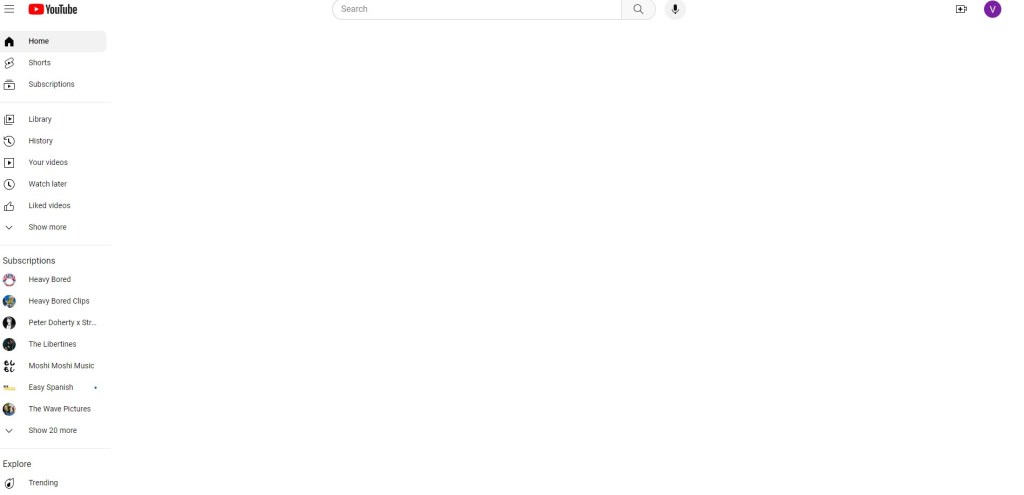
      My YouTube homepage after installing the Unhook plugin.

      4. Grammarly

      You’ve probably seen the ads. Grammarly is a popular Chrome extension that provides grammar, spelling, and punctuation checking. Since I’ve started using Grammarly, I’ve had fewer typos in my work than relying on built-in spell checkers alone. Grammarly can do all the following, and more:

      • Catch grammar/spelling errors – Grammarly’s real-time checks identify writing mistakes as you type, allowing writers to catch and correct issues early.
      • Enforce style rules – The extension can be customized to check for style guide rules on aspects like punctuation, capitalization, passive voice, etc.
      • Improve clarity – Grammarly provides readability scores and suggestions to help writers make their work more clear and concise.
      • Perfect tone – Grammarly provides tone adjustments for making writing more formal, casual, or business-appropriate.
      • Save time editing – By handling basic editing tasks like grammar and spelling checks, Grammarly allows writers to focus their efforts on higher-level content improvement.

      The internet presents both opportunities and obstacles for writers today. While it offers useful research materials, it also enables infinite distractions. Using extensions like StayFocusd, WebTime Tracker, Unhooked, and Grammarly, writers can control their online environment to minimize distractions and optimize their use of time.

      Give these tools a try to become more focused, aware of your habits, and productive with your writing. Install one or all four to block distractions, track your time, limit YouTube, and catch errors. With the help of these Chrome extensions, you can build the habits and environment for writing success.

      Let me know in the comments which extension sounds most useful for your workflow. And if you have any other recommended Chrome tools for writers, please share! I’m always looking to further optimize my process.


      Posted in Uncategorized, writing habits

      The Pomodoro Technique for Writers: A Productivity Hack for Focus

      Staring at a blinking cursor for hours leads to frustration for many writers. Burnout looms over marathon writing sessions. That’s why the pomodoro technique can be a game-changer for writers looking to boost productivity and prevent fatigue.

      The pomodoro technique is a time management system that utilizes timed intervals to enhance focus. By writing in short, distraction-free sprints, writers can optimize their energy, attention and motivation.

      This article will cover how the pomodoro technique helps writers improve productivity and beat burnout through strategically timed writing sessions. You’ll learn the background of the pomodoro method along with tips to implement it in your writing process. Get ready to maximize your time, creativity and output!

      What is the pomodoro technique?

      The pomodoro technique is a time management system that breaks work into intervals, usually 25 minutes long, separated by a short five-minute break. Francesco Cirillo first developed the technique in the late 1980s in order to improve productivity and focus. It gets its name from a tomato-shaped egg timer that was popular at the time.

      As a university student, Cirillo struggled with staying engaged and productive while studying. He often felt overwhelmed by the amount of material and often procrastinated. To improve his focus, Cirillo decided to break his work into short intervals with breaks in between.

      The basic steps are:

      1. Decide on a task to work on. Set a timer for 25 minutes.
      2. Work on the task until the timer rings. Avoid distractions during this time.
      3. When the timer rings, take a 5-minute break.
      4. After taking a break, reset the timer for another 25-minute work session.
      5. After completing 4 work intervals, take a longer 15-20 minute break.
      6. Repeat steps 2-5 until the work is complete.

      The forced breaks and time constraints help minimize burnout while maximizing focus. If you’d like, the technique can be customized with longer or shorter work intervals and breaks. Many people find the rhythm helpful for time management and maintaining motivation. You can use any app or physical timers that you already own. I like to use one side of a vinyl record. When the side ends, I get up and do my break before flipping over the album.

      What are the benefits of the pomodoro technique for writers?

      The pomodoro technique has helped me organize my longer writing projects and get more chores done around the house, as starting laundry and doing the dishes can be a great “break” from writing. I recommend the method to all my students for the following reasons:

      • Increased focus – The timed nature minimizes distractions and keeps you focused on writing for each 25-minute sprint. In a study by the University of Illinois, short breaks were shown to replenish attention and increase productivity.
      • Better time management – By breaking down writing into digestible chunks, you get a sense of how long tasks take. This improves time planning.
      • Preventing burnout – The mandated short breaks act as a safeguard against marathon writing sessions that lead to fatigue and creative burnout.
      • Reduced procrastination – The timer adds accountability and motivation to start writing rather than putting it off. The short timeframe also makes tasks feel more achievable.
      • Improved productivity – Many writers find they complete more daily word count and make greater progress in their work utilizing the focused sprints and time tracking.
      • Finding flow – Having defined writing periods can help writers get into a state of flow where words come easier.
      • Maintaining energy – The cyclic rhythm of intense focus and recovery helps keep energy and motivation high.
      • Opportunities to refill well – The breaks create natural intervals to do quick research, take notes, or stretch your mind with an unrelated task. This has been proven to jog creativity and break writer’s block.
      • Reliable writing routine – Setting timers regularly can establish a productive daily writing habit.

      If you are primarily working on a screen, the pomodoro technique provides additional benefits. Taking a screen break reduces eye strain, improves posture and encourages movement – all of which will increase your creativity.

      Ready to give the pomodoro technique a try? Here are a few ways you can incorporate it into your next writing session:

      How can writers use the pomodoro technique?

      • Use your first timed session for brainstorming. Try using the whole timer period for freewriting, that is writing down everything that comes into your head. If you already have a story idea but are unsure how to get started, use your first timer to jot down all the ideas you have related to your idea.
      • Choose a scene, just one, and write it for the duration of the timer. Having the intention of focusing on a single scene can help clarify your vision. If you choose to set another timer after your first break, you can either continue the scene you are working on or go on the the next scene.
      • Or alternatively, you can use the pomodoro technique to switch between writing and editing. Try not to fix errors or go backward during your writing sessions in order to stay focused on one task at a time.
      • Pair up with a partner or join a writing group. Set a timer together in order to motivate each other and hold each other accountable.

      Start timing those writing sprints today to power through projects while preventing burnout. If you are looking for more effective planning hacks for writers, check out my article “6 Time Management Tricks for Writers” and follow this blog on Facebook or Twitter for more tips on reaching your writing goals. Happy writing!

      Posted in revision, writing habits

      Why I Write By Hand

      Earlier this year, I talked to Bair Hurley at the Writerly Bites podcast about writing by hand. I write all my first drafts by hand, sometimes my second drafts too. I often recommend writing by hand to my beginner writing students who are afraid of the blank page. When we’re writing on a computer, it seems very formal immediately. Because that Times New Roman looks so neat and perfect in the Word Processor, we want the writing to be perfect too. We start typing, that red squiggly line shows up. Now we’re going back.

      When we’re writing by hand, it’s much easier to think of our draft as something impermanent, like a grocery list. It’s notes.

      I often teach “Shitty First Drafts” by Anne Lamott, which is a very funny chapter from her book Bird by Bird. It’s all about turning off your inner critic and freeing yourself to write your first draft.

      She says, “The first draft is the child’s draft, where you let it all pour out and then let it romp all over the place, knowing that no one is going to see it and that you can shape it later. You just let this childlike part of you channel whatever voices and visions come through and onto the page. If one of the characters wants to say, “Well, so what, Mr. Poopy Pants?,” you let her. No one is going to see it. If the kid wants to get into really sentimental, weepy, emotional territory, you let him. Just get it all down on paper because there may be something great in those six crazy pages that you would never have gotten to by more rational, grown-up means.”

      In my experience, writing by hand can help us free that inner child. We can return to an earlier stage in our lives when we scrawled all over the page with abandon.

      For me, the biggest benefit to writing by hand is avoiding the internet. The computer just has too many distractions. I’m one of those people who has all kinds of browser add-ons to limit my ability to use distracting websites. I have one that eliminates the feed of social media sites, and another that sets a time limit. Still, I keep finding new ways to waste time online.

      What I have to do is go into a room with no devices, just a pencil and paper. Then I can only think about the words on the page.

      I always dread finishing a draft, because then I have to go to my computer and face all those temptations again. Still, there are benefits to having to completely rewrite the story when I type it up. When you have a typed first draft, it’s easy to accept the major choices you’ve already made. Instead of thinking about if that scene is really necessary, you just fiddle around with the word choices. But if you have to type up the whole thing, why spend the time typing up a scene that’s not working at all? Plus you’ll find that you’ll make improvements to the word choice too, without even thinking about it.

      Don’t take it from me. A lot of successful writers still write by hand: Joyce Carol Oats, Quentin Tarantino, and Neil Gaiman to name a few.

      I’ll leave you with the words of Stephen King, who switched to writing by hand after years of typing. He said writing by hand “makes you think about each word as you write it[…]the sentences compose themselves in your head. It’s like hearing music, only its words. But you see more ahead because you can’t go as fast.”

      Posted in Uncategorized, writing habits, writing prompts

      4 Ways To Find Story Ideas

      How do we get story ideas? We all want an idea so great that we can’t put down the pen. But all writers sometimes feel like the muse has left them. If you’re like a lot of my fiction students, you might love words and language and get pleasure from putting together sentences, but struggle to find a story to structure your writing. Sometimes you might feel like you have to wait around for the angel of inspiration to bless you, but it turns out, generating new story ideas is a skill like any other. It can be honed and practiced.

      This blog post is not going to be a list of prompts. There are endless web pages containing lists of prompts. These don’t always solve the problem of inspiration. It’s not uncommon to get a prompt, and still have no idea what to do with it.

      Instead, I’m going to be talking about ways you can mine your own experiences and interest for story ideas. Unlike prompts, which might feel random or unrelated to you, these methods will generate story ideas for you that are already connected to powerful memories and the things you feel most passionate about.

      Have A Writing Practice

      I’ve talked a lot about the importance of having a writing practice. However, I don’t think everybody has to write every day. We all have different lives and schedules and what’s important is finding something that works for you.

      The reason why this helps generate story ideas is the practice of writing will change how you see the world. When I was a teenager, I used to write poetry, and because I was in the habit of writing poetry, I would see things that would give me ideas for poems. I don’t write poems anymore, and I never get ideas for poems.

      If you don’t know what to write about, you can start keeping a regular journal. This could be your day-to-day activities, your observations or your dreams. Eventually, you’ll start to notice what you like to write about, what’s interesting, and what could be expanded.

      Write One True Sentence

      This is how Ernest Hemingway always broke his writer’s block. For him, “one true sentence” is a simple declarative sentence, not something overly flowery or philosophical. His first lines usually have concrete physical details and introduce both a setting and a character. Here are some examples:

      • It was late and everyone had left the café except an old man who sat in the shadow the leaves of the tree made against the electric light. — “A Clean, Well-lighted Place”
      • It was now lunch time and they were all sitting under the double green fly of the dining tent pretending that nothing had happened. — “The Short Happy Life of Francis Macomber”
      • He came into the room to shut the windows while we were still in bed and I saw he looked ill. — “A Day’s Wait”

      What “true” sentences can you think of? You might want to imagine a person who caught your eyes somewhere, or an event from your real life. You can still feel free to use this as a jumping off point if you write fiction.

      Listen to Music

      Appreciating another form of art can help us reach creative breakthroughs. I often use paintings, photographs and music during writing exercises in my classes. Of course, you can get inspiration from dance, sculpture, film or any work of art that you’re passionate about.

      When I use music prompts in class, or to inspire my own writing, I tend to favor songs that have cryptic lyrics. Some examples that I’ve used are “Birthday” by the Sugarcubes, “O Children” by Nick Cave and the Bad Seeds and “Desolation Row” by Bob Dylan. I feel like this inspires nonlinear thinking as it is easy to free-associate from the images without pinning you to a single narrative. Or you could ignore the lyrics altogether and focus on the emotions that the music produces for you.

      Of course, if you have a favorite narrative song, you can also try to expand the story. Maybe there is a minor character in the song that you’ve always wondered about, or you expect the lovers in the song are bound to break up.

      Take Inspiration from Books

      Part of being a writer is being part of the literary tradition. Writers have been taking inspiration from their fellow writers for thousands of years. Even Shakespeare’s Romeo and Juliet was based on an Italian poem, which in turn was inspired by the Roman writer Ovid’s book Metamorphoses.

      One exercise that I like to do with my students is to use opening lines from famous novels to begin our own stories. A good opening sentence can evoke endless possibilities. This works best if you use a sentence that’s unfamiliar to you, which is why I didn’t provide the titles which might introduce bias. Here is the list I use in class:

      • “All children, except one, grow up.”
      • “It was a pleasure to burn.”
      • “The sky above the port was the color of television, tuned to a dead channel.”
      • “We went to the moon to have fun, but the moon turned out to completely suck.”
      • “Through the fence, between the curling flower spaces, I could see them hitting.”
      • “It was a bright cold day in April, and the clocks were striking thirteen.”
      • “A screaming comes across the sky.”
      • “The sun shone, having no alternative, on the nothing new.”
      • “In the town, there were two mutes and they were always together.”
      • “I write this sitting in the kitchen sink.”

      There are many other ways to find inspiration from your favorite books and stories. There are published novels about the Pride and Prejudice characters fighting zombies and Sherlock Holmes during World War II. Being inspired by your favorite books isn’t just for online fan fiction, though you’re basing something directly on an existing work, make sure it’s in the public domain.

      So you might want to give it a try. What happens when you put your favorite characters into a new situation or exotic setting? What would Romeo and Juliet’s marriage have been like if they didn’t die? What if Odysseus was an Iraq War veteran? All great books from the past can be updated a multitude of ways.

      Are you looking for more writing inspiration? Follow this blog on Facebook or Twitter! I look forward to writing with you again.

      Posted in writing habits

      6 Time Management Tricks for Writers

      If you are anything like my students, the hardest part about writing for you isn’t the writing itself – it’s scheduling your writing time and working on your project consistently enough to meet your goals.

      In this post I will share six time-management and goal-setting techniques that can benefit any writer’s life.

      Discover Opened Mode

      “Closed mode” is a mindset in which we are anxiously focused on our to-do list. In this mindset, we are impatient and have little room for humor.

      In contrast, “open mode” is when we are childlike and playful. In this mindset, we are more able to be creative.

      I learned about closed mode and open mode from a lecture by John Cleese on creativity. John Cleese is a comedic actor and writer from Monty Python, who was also responsible for many other fine movies and TV shows, like A Fish Called Wanda and Fawlty Towers.

      In his lecture, he gives five steps for getting from closed mode to open mode.

      1. Space: The first step is creating a space away from the stresses of life. It can be helpful to have a particular workspace, and let the people in your life know they aren’t to disturb you there.
      2. Time: You also should set aside a specific amount of time. Cleese suggests thirty minutes. This can make it easier to relax into the open mindset because you’ll know that once it’s over you can go back to ticking items off your to-do list.
      3. Time: Yes, he lists time twice. This time he means to keep working at your project even when you feel stuck. It’s easy to hit a minor roadblock in your writing and go check Facebook or turn on the TV, but don’t do it. Keep working for the amount of time you set aside.
      4. Confidence: Write without worrying about making a mistake. There’s an old saying, “write drunk, edit sober.” While I wouldn’t literally recommend it, you should write your first draft confidently without looking back. We can come up with our most creative and original ideas when we write without fear.
      5. Humor: Nothing relaxes us more than humor. At its core, humor is finding surprising connections between two or more ideas. Find a way to laugh before you start your writing session to boost your creativity.

      The Pomodoro Technique

      John Cleese’s advice on time is consistent with a popular time management system called the Pomodoro technique. This system gets its name from a brand of egg timer that is shaped like a tomato. It has just a few simple steps:

      1. Decide on what task you have to do.
      2. Set a timer for twenty-five minutes.
      3. Work on the task until the timer rings.
      4. Take a five minute break.
      5. Set the timer again and work for another twenty-five minutes…

      I often use the Pomodoro technique when I write. Sometimes instead of using a timer for 25 minutes, I’ll use one side of a record, which is usually about the right amount of time. I find that the five minute break is very important because when I have the short break planned, I’m unlikely to take a longer, unplanned break.

      Suggested Activity

      Think about your schedule and your environment. Where and when can you make room for writing? Be as precise as possible, for instance, instead of saying, “in the mornings” say “at 7 A.M. after my first cup of coffee, I will use my laptop in the study.”

      SMART Goals

      Not all goals are created equal. If our goals are vague or unrealistic, we won’t be able to meet them. Make sure your goals are SMART:

      • Specific: How many minutes, pages or chapters are you planning on writing?
      • Measurable: How will you  keep track of the number of words or minutes you write? 
      • Attainable: Setting a goal that is too challenging may lead to failure and discouragement.  
      • Relevant: Why is this goal important to you? Do you like the way the act of writing makes you feel centered? Or do you have a story you are burning to share?
      • Time-framed: When do you want to accomplish this goal?

      Suggested Activity

      Write about a goal that you’ve accomplished in the past. What made you succeed? How did you feel when it was complete? How can you replicate those results in the future?

      Find Accountability

      A group of people with similar goals can keep each other accountable. Here are some ways you can connect with other writers:

      • Take a writing class: Writing classes are a great way to meet other beginning writers and get some guidance from a teacher at the same time.
      • Find a writing group on MeetUp.com: I’ve met many wonderful people through MeetUp. You can find writers’ groups devoted to open mics, silent writing sessions, critiquing each other’s work or just hanging out.
      • Use the NaNoWriMo web forum: I haven’t used this one personally, but this website is very popular among novelists who want to celebrate their progress on their projects.
      • Take part in the #writingcommunity on Twitter: Twitter can be a useful place for finding writers in your genre.

      Sign a Creativity Contract

      I’ve mentioned before that I love the creativity contract from Julia Cameron in her book The Artist’s Way. She recommends displaying it where you work in order to stay motivated. Here is her original contract: 

      I, ___________________, understand that I am undertaking an intensive, guided encounter with my own creativity. I commit myself to the twelve-week duration of the course. I, __________________, commit to weekly reading, daily morning pages, a weekly artist date, and the fulfilment of each week’s tasks. I, ___________________, further understand that this course will raise issues and emotions for me to deal with. I, ___________________, commit myself to excellent self-care—adequate sleep, proper nutrition, exercise, and pampering – for the duration of the course. ______________________________________ (signature) ___________________ (date)

      The details of this contract are pretty specific for people following the program in her book. For our own use, we can make our own creativity contracts using our SMART goals. Here are some examples that I suggest to my students:

      • Start a daily writing habit for 30 minutes every morning.
      • Complete three chapters of your novel by the end of the month.
      • Write short story consisting of 3-10 pages every week for the next three months.

      Suggested Activity

      Write your own Creativity Contract that is tailored towards your SMART goals. Sign it and find a place to display it near your workspace.

      Use Productivity Tools

      It is tough to stay focused today. Very smart people are working hard to make their technology as addictive as possible. Luckily, some other smart people have created some tools to fight back.

      • Freedom: a computer application that blocks the internet for a chosen number of hours. I used this application a lot when I was writing papers in college and grad school.
      • Stayfocused: a Chrome plugin that blocks certain websites after a chosen amount of minutes per day. I currently use this plugin to limit my social media time. I only have thirty minutes a day, which motivates me to spend that time connecting with the writing community instead of mindlessly scrolling.
      • Joe’s Goals: a free online habit tracker. I’ve been using this website since 2013. I love the simple interface and get a lot of pleasure out of checking off my goals.
      • Morning Pages: Turns writing goals into an addictive game. Like the Creativity Contracts, this is also inspired by Julia Cameron’s The Artist Way. I haven’t used this one as much, but it’s very visually appealing.
      • Clockify: a free timer for projects. A friend recently recommended this to me. It’s a great way to keep track of how much time you are spending on your writing projects.

      But of course my favorite way to stay focused on my writing is the low-tech way: in a notebook, away from a computer.

      If you are looking for more advice on meeting your writing goals, follow this blog on Facebook or Twitter! I look forward to writing with you again.