Posted in announcements

Spring Class: Bob Dylan as Literature & Inspiration

Greetings! I’ve loved staying home with the new baby, but I’m looking forward to getting back in the classroom.

This spring I’m teaching Bob Dylan as Literature & Inspiration at Arlington Community Education. What’s that all about? From the fairy-tale simplicity of “Girl from the North Country” to the surrealist panorama of “Subterranean Homesick Blues” to the autobiographical narrative of “Sara,” Dylan’s songs have transported listeners to worlds real and imagined. In this literature and writing class, we’ll examine the literary forms of surrealist poetry, lyrical ballads, and protest songs and learn how to apply these techniques to our own writing.

The class is at Arlington High School on Tuesdays, from May 21 to June 11, 7:00 – 8:30 PM. You can register at the Arlington Community Education website.

Posted in announcements, interviews, the novel

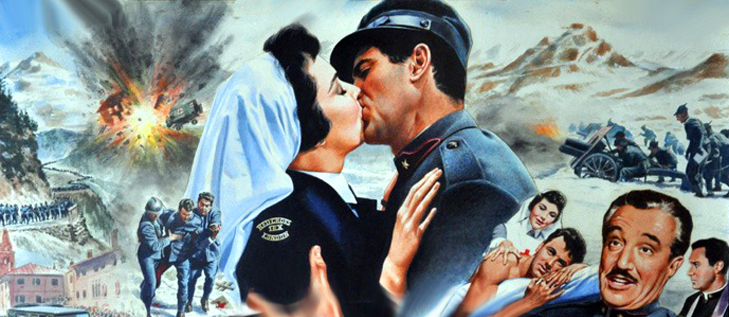
A Farewell to Arms on Heavy Bored Podcast

My discussion about Ernest Hemingway’s A Farewell to Arms with Andrew Wittstadt on the Heavy Bored Podcast

What does it mean for a work of literature to be universal? In the Ken Burns and Lynn Novick documentary, The Vietnam War, there is an interview with a female North Vietnamese soldier. Before she left home to serve the communist cause, her parents gave her a copy of A Farewell to Arms. She helped to build the Ho Chi Minh Trail, the illicit road through Cambodia and Laos that brought armaments to the Viet Cong in the south. At night, when the work was done, the road she had just built would be bombed by the Americans. While she was huddling in a trench, waiting out the bombardment, she would read A Farewell to Arms. She said the novel connected her to all the soldiers in history who ever suffered in war.

Join Andrew and I as we discuss Hemingway as a universal writer, a white male writer, an anti-war writer, and more.

If you can’t get enough Hemingway, be sure to also check out my Three Writing Prompts Inspired by Hemingway.

Posted in productivity, writing habits

Best Google Chrome Plugins for Writers

Writers today face many distractions that can derail productivity and impact the writing process. With so many websites, apps, notifications, and rabbit holes competing for our attention, it can be challenging to focus and make progress on writing projects. Fortunately, Google Chrome offers some handy extensions that can help writers take control of their environment, build better habits, and optimize their workflows.

In this post, I’ll highlight four of my favorite Chrome extensions for improving focus, tracking time, limiting distractions, and catching errors during the writing process. Whether you struggle with procrastination, losing time to research tangents, or just need help enforcing good writing habits, these tools can help you manage your online time and energy more effectively. Read on to learn how StayFocusd, WebTime Tracker, Unhooked, and Grammarly make me a more productive and proficient writer.

1. StayFocusd

StayFocusd is a Chrome extension that helps people stay focused on work by blocking or limiting access to distracting websites. Some of the ways StayFocusd helps keep me on my writing task include:

  • Block distracting websites – Writers can use StayFocusd to block time-wasting sites like social media, news, YouTube, etc. during writing time. This removes distractions.
  • Set writing time limits – StayFocusd allows setting daily time limits for websites. Writers can use this to define writing goals and limit time on non-writing sites.
  • Focus during writing sessions – With distracting sites blocked, writers can get into a flow state and avoid wasting time toggling between apps/sites.
  • Limit Internet research – The blocking features can also limit time spent going down research rabbit holes online, keeping writers focused.
  • Prevent procrastination – StayFocusd is useful for procrastinators – blocking sites makes it harder to procrastinate on writing work.
  • Set nuclear option for writing – The “nuclear option” blocks all sites except a whitelist. Writers can whitelist only writing apps/sites to force focus. Combine it with the Pomodoro Technique for extra focus.

StayFocusd gives writers more control over their environment and habits to minimize distractions and stay focused on writing. For me, it’s an indispensable productivity tool. I use it to block social media, news sites, and online retail, but you can personalize it for your own biggest time sucks.

2. WebTime Tracker

WebTime Tracker is a Chrome extension that tracks how much time you spend on websites and applications. I find it helpful to track my time especially when doing background research for writing projects.  Its key features for writers include:

    • Track time spent writing – The extension can track time spent in word processors/writing apps to help writers know how much actual writing they are getting done each day.
    • Identify productive writing times – The productivity reports can show writers when their peak writing times are based on when they have longer writing sessions. This allows for optimizing schedules.
    • Track research time – Time spent researching and gathering material can also be tracked separately from writing time to analyze efficiency.
    • Analyze habits – Writers can look at usage trends to see if they are procrastinating, identify what steals their time, and adjust their habits accordingly.

    WebTime Tracker aims to make you more aware of how you spend time online so you can focus on being productive and minimize distractions.

    3. Unhook

    Unhook is a plugin that works with YouTube that I only recently discovered. I was reluctant to use Stayfocusd to set limits on YouTube because I used it for exercise and medication, but kept getting stuck in video rabbit holes. The website works hard on its algorithms to keep us users on the site, after all. Unhooked is my way to fight back. With this plugin, I only use YouTube for what I need. Here’s how it works:

      • While on YouTube, Unhook hides related videos, comments, shorts tab, suggestions, homepage recommendations, and other distractions.
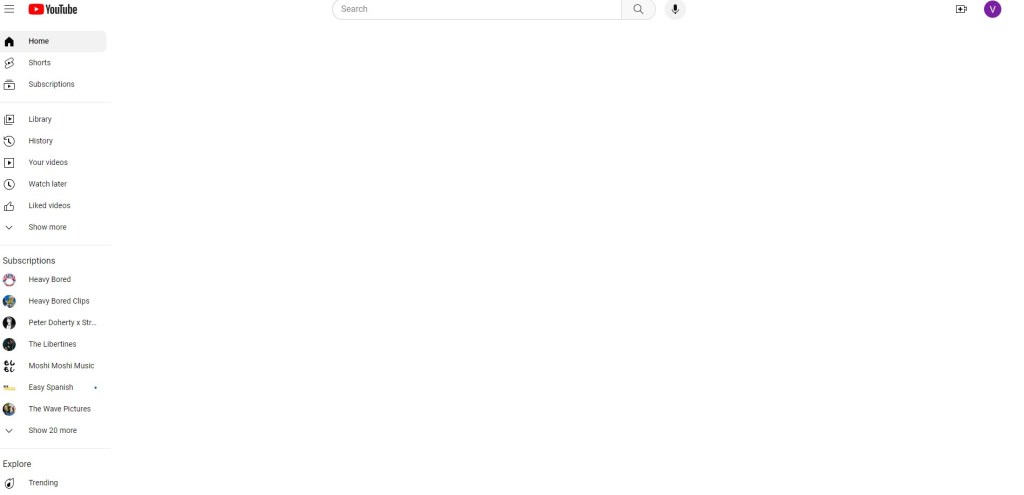
      • When you navigate to the YouTube homepage, you no longer see dozens of videos that may be unrelated to the content you went there to view. Instead, you see only your subscription sidebar and the search function.
      • After you watch a video, Unhooked prevents Autoplay and hides the recommended video feature, allowing you to move on to your next task.

      Unhook has made it easy for me to use YouTube only for what I need and then get back to my writing. Its settings are easy to customize, so you can block only the YouTube features that are most distracting for you.

      My YouTube homepage after installing the Unhook plugin.

      4. Grammarly

      You’ve probably seen the ads. Grammarly is a popular Chrome extension that provides grammar, spelling, and punctuation checking. Since I’ve started using Grammarly, I’ve had fewer typos in my work than relying on built-in spell checkers alone. Grammarly can do all the following, and more:

      • Catch grammar/spelling errors – Grammarly’s real-time checks identify writing mistakes as you type, allowing writers to catch and correct issues early.
      • Enforce style rules – The extension can be customized to check for style guide rules on aspects like punctuation, capitalization, passive voice, etc.
      • Improve clarity – Grammarly provides readability scores and suggestions to help writers make their work more clear and concise.
      • Perfect tone – Grammarly provides tone adjustments for making writing more formal, casual, or business-appropriate.
      • Save time editing – By handling basic editing tasks like grammar and spelling checks, Grammarly allows writers to focus their efforts on higher-level content improvement.

      The internet presents both opportunities and obstacles for writers today. While it offers useful research materials, it also enables infinite distractions. Using extensions like StayFocusd, WebTime Tracker, Unhooked, and Grammarly, writers can control their online environment to minimize distractions and optimize their use of time.

      Give these tools a try to become more focused, aware of your habits, and productive with your writing. Install one or all four to block distractions, track your time, limit YouTube, and catch errors. With the help of these Chrome extensions, you can build the habits and environment for writing success.

      Let me know in the comments which extension sounds most useful for your workflow. And if you have any other recommended Chrome tools for writers, please share! I’m always looking to further optimize my process.

      Posted in characters, the novel, writing prompts

      Character Development 101: Tips for Unforgettable Protagonists

      A great story is defined by its characters. But developing characters that feel like real people is not easy, and it’s one of the aspects of story writing that my students ask me about the most.

      Advice for beginner writers often suggests making a list of your character’s favorite food, color and hobbies, along with a list of physical traits like hair and eye color. But think for a moment about your best friend or a beloved family member. What is the first thing that comes to mind when you think of that person? It’s probably not their brown eyes or their stamp collection. Maybe it’s their sense of humor, maybe it’s the way they show their love with big elaborate dinners, maybe it’s the fact that they always pick up the phone when you call, no matter what. But regardless, these are all traits that are hard to capture in a list or even a paragraph of exposition. Instead, I always suggest to my students that they develop their characters by working in scenes.

      Below are some writing prompts that will help you develop your character by putting them in a situation where a reader can see how your character acts in real time, rather than a simple list or paragraph of description. Not all of these will produce final draft material, but they will help you learn more about your character so you can strengthen the story that you want to write.

      Save the Cat

      A character’s moral compass is among their most important traits. First of all, it tells the readers whether they should love, hate or love to hate this particular character. The way the character handles moral choices early on also creates foreshadowing for how the main character will resolve the central conflict.

      The screenwriting book Save The Cat! The Last Book on Screenwriting You’ll Ever Need by Blake Snyder offers this advice: have your hero “save the cat” to engage your audience emotionally and make them root for the protagonist. It’s a shorthand trick for writers to get viewers to bond with the main character right away.

      What does it mean to “Save the Cat”? A “Save the Cat” moment refers to any scene that makes the audience care about the protagonist by showing their noble, likable qualities. For instance, in the first chapter of The Hunger Games, Katniss volunteers to participate in a fight to the death in order to save her sister. The film Die Hard begins with Bruce Willis’s character bringing a teddy bear home for his son, revealing his soft, decent side before the action begins.

      Alternatively, an anti-hero or villain might kick off the story by “killing the cat,” or doing something that makes them immediately unlikeable. In Charles Dicken’s classic “A Christmas Carol,” the story begins with Ebenezer Scrooge fervently turning down an invitation to celebrate Christmas with his nephew, calling the holiday a “humbug.” He then refuses to donate to a charity for the poor and only reluctantly allows his overworked assistant the day off for Christmas. Thus, his miserly, bitter character traits are well-established before the inciting incident of the story, the appearance of the first ghost.

      Writing Exercise

      Write a scene introducing your character. What is a simple way that you can show their ethical qualities? Whether it is showing generosity to a stranger or stealing a car for joyriding, the character’s first moral choice of the story will show the reader the inner workings of their heart.

      The Moral Dilemma

      As your story progresses, your character should continue to face difficult ethical decisions. When we think of what a story is “about,” we often think of the external conflict first. For instance, when we think of Jaws, we think about a town being terrorized by a killer shark, and the men who have to stop it. But a good story never simply has one external conflict. Your main character always should be wrestling with an internal dilemma that intersects with the external conflict. In Jaws, police chief Brody suffers from a fear of water. He’s also morally passive, allowing the mayor to bully him into reopening the beaches despite his own instinct that it’s not safe. To resolve the external conflict, he must overcome both of his internal obstacles: he must become a leader who takes decisive action, which also involves facing his fear of water by hunting the shark.

      The stories that stay with us the most are stories where the main character is forced to make a moral stance in the face of ambiguous or incomplete information. In Hamlet, the titular hero struggles with whether or not to kill his uncle Claudius, who has murdered Hamlet’s father and married his mother. The ghost of Hamlet’s father appears in the first act and asks his son to avenge his murder. The bookish Hamlet is reluctant to act in part because he cannot be sure that his uncle killed his father. He has the word of a ghost, who in his view could just as easily be an agent of hell sent to deceive him rather than his father asking for vengeance. Yet he feels he is obligated to act due to his society’s views on masculinity and filial duty.

      It takes Hamlet the length of the four-hour play to resolve the story’s conflict, and in the meantime we see different sides of his personality emerge:

      • Philosophic – Hamlet deeply contemplates ethics, divinity, justice and morality when deliberating action. His philosophical nature is revealed through his solitary musings.
      • Melancholic – The weight of his dilemma fuels Hamlet’s depressive tendencies, making him increasingly morose as he struggles with the decision.
      • Idealistic – His values of honor, justice and morality conflict with the reality of revenge. He agonizes over preserving his ideals.
      • Suspicious – Not fully trusting the ghost, Hamlet suspects deception which affects his response. His distrustful side emerges.
      • Passionate – When stirred by rage, grief, or betrayal, Hamlet’s passions boil over, spurring him to lash out verbally and physically.
      • Witty – Hamlet can never resist verbal sparring matches. Wit becomes his weapon and shield.
      • Indecisive – Caught between competing imperatives, Hamlet wavers on the edge of action. Indecision defines his response.
      • Impulsive – He acts rashly at times when emotions overwhelm reason, revealed in outbursts and confrontations.

      Facing the moral dilemma brings out all aspects of Hamlet’s personality: his virtues, flaws and inner turmoil. We see his multifaceted nature emerge under pressure.

      Without moral dilemmas, a plot is merely a series of meaningless actions. By putting characters into situations where right and wrong are complicated, moral dilemmas become powerful sources of story conflict, tension, and insight into the human condition.

      Writing Exercise

      What is your main character’s biggest moral dilemma? Spend a few minutes brainstorming three different ways that moral dilemma could be resolved, and how each one would bring out different traits in your character.

      The Argument

      By their nature, moral dilemmas involve conflict between characters. Whenever two characters disagree or are in tension with one another, it highlights the differences between them. However, not all arguments need to be a high-stakes debate about the ethics of using nuclear weapons. Lovers might tease each other. Friends might have goofy debates (Is a hot dog a sandwich?). All forms of argument, from the joking to the mundane to the morally imperative, reveal layers in our characters.

      Too often in beginner fiction, I see dialogue that looks like this:

      “Hi, David, how are you today?”

      “I’m alright.”

      “Enjoying the nice weather?”

      “Yes, it’s great the sun is finally out.”

      Not only is this incredibly boring, it doesn’t say anything about the characters. There’s no conflict, no tension, no disagreement. Let’s try this again but with a slight twist.

      “Oh, it’s you, David. How’s it going?”

      “You’re pretending to care all of a sudden. Never asked me before.”

      “Nevermind. Nice weather, at least.”

      “Yeah, that blasted sun finally decided to show its face.”

      While the characters are still making small talk, there’s an oppositional dynamic that raises questions about the characters’ history. By disagreeing, the characters seem more vivid and full of personality, thus making the reader care more about what’s going to happen next.

      Some of the most famous love stories in literature, such as Elizabeth Bennet and Mr. Darcy in Pride and Prejudice or Beatrice and Benedick in Much Ado About Nothing, are characterized by the witty arguments between the heroes before they fall in love. Here is a repartee from the first scene of Much Ado About Nothing.

      BEATRICE

      I wonder that you will still be talking, Signior
      Benedick: nobody marks you.

      BENEDICK

      What, my dear Lady Disdain! are you yet living?

      BEATRICE

      Is it possible disdain should die while she hath
      such meet food to feed it as Signior Benedick?
      Courtesy itself must convert to disdain, if you come
      in her presence.

      BENEDICK

      Then is courtesy a turncoat. But it is certain I
      am loved of all ladies, only you excepted: and I
      would I could find in my heart that I had not a hard
      heart; for, truly, I love none.

      BEATRICE

      A dear happiness to women: they would else have
      been troubled with a pernicious suitor. I thank God
      and my cold blood, I am of your humour for that: I
      had rather hear my dog bark at a crow than a man
      swear he loves me.

      We get a taste here of the sense of humor of each character, especially Beatrice’s love of wordplay. And despite the hostility between them, we see how they are alike: both are proud and have sworn off romance, thus foreshadowing that the pair have more in common than they think.

      Writing Exercise

      A little disagreement can make an otherwise boring, expository scene lively and engaging. Try writing a scene where one character is trying to convey some important backstory to another character, who either isn’t listening or keeps interrupting. How does the first character express their anger? Why does the second character have trouble listening? Is it because they are daydreaming, being a smart-aleck, or something else? Your answers will help develop your characters.

      Love

      Relationships between characters need more than just conflict though. There’s one thing that I see lacking in many otherwise well-written stories in literary journals these days: genuine bonds between characters.

      Relationships are at the heart of all stories. Some may center on a star-crossed romance, others a friendship blossoming under unlikely circumstances, or a parent and child with a difficult relationship coming to a new understanding. The clashing personalities and arguments that arise in any relationship—whether romantic, platonic, or filial—cannot be ignored, but love still ought to be at the heart of it.

      Of course, there are exceptions. I’m not saying that you can’t write the next American Psycho if your main interest is exploring alienation or the mind of a sociopath. But if you’re writing say, a story about a marriage falling apart, I want to know why brought the couple together in the first place, not necessarily in a flashback, but in the little details of their interactions that hint at their shared history. If you’re writing about an adult child who has a difficult relationship with their parents, I don’t want the child’s resentments, however legitimate, to override the parent’s humanity.

      I keep seeing these contemporary short stories where the main character is a perfect angel and the people closest to her are all terrible. Her mother, her father, her siblings, and her spouse, are all irredeemable. A story like that isn’t revealing any new insights into the human condition. Instead exploring both sides in a complicated relationship will interest the reader and make them want to read until the resolution.

      Eugene O’Neill’s A Long Day’s Journey Into Night, is an autobiographical play dramatizing the conflicts of a family of actors. The story was so personal, O’Neill only wanted it published after his death. His stand-in, Edmund, has many reasons for resenting his father. He is miserly to the point of insisting on treating Edmund’s tuberculosis at the cheapest hospital possible. He’s squandered all the family money on property. And Edmund sees his father as responsible for his mother’s morphine addiction, as his acting career kept her isolated and unable to fulfill her own dreams. But by the end of the play, Edmund’s father opens up about his remorse for his failings as a father, and the two bond over their shared love of literature.

      Writing Exercise

      Choose two of your characters who are at odds, yet have a close relationship. Perhaps they are blood relatives. Perhaps they are stuck in the same environment, such as roommates in a boarding school or co-workers on a space station. They didn’t choose to be close, and the differences in their personalities make the proximity difficult. Describe a moment where your point-of-view character sees the other at their most vulnerable. How does this affect how they perceive the other?

      Point of View Shift

      This last tip is for when you are struggling to develop a secondary character. While your story should have a consistent point of view of your choice, it can be helpful when developing your ideas to play around with a different perspective.

      A lot of times when we’re writing, we know out main characters much better than the others. After all, we are writing from their perspective and have been developing their unique voice. But when a secondary character drops in for a few scenes, we will want them to feel like a full and dynamic person.

      Writing Exercise

      Spend a few minutes rewriting a scene from the point of view of your secondary character from a first-person perspective. Think about what unique word choices they might use and where their sense of humor might come into play. Remember, that in your final piece your point-of-view must be consitant, but hopefully by doing this exercise, you are better able to incorporate your secondary character into your story.


      In the end, vivid characters come from showing, not telling. Avoid lengthy exposition about a character’s history or personality traits. Instead, reveal who they are through their actions, dialogue, and relationships. Put them in scenes that test their morals, challenge their relationships, and force them to argue. Play with perspective shifts during your drafting process to gain insights. If you follow these tips, your characters will come to life on the page.

      Now it’s your turn. Choose one of the exercises above and spend 15 minutes developing your protagonist. Let their voice emerge through dialogue and their true nature shine through moral dilemmas. Readers will be eager to follow them wherever the story leads. Share your results in the comments below! Thanks for writing with me. Subscribe to the blog or follow me on Facebook and Twitter for more prompts.

      Posted in interviews, publishing

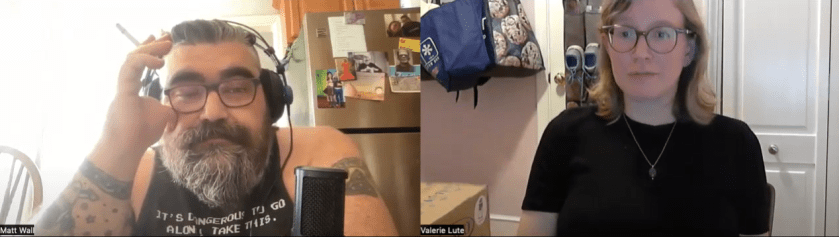
      Art & Anarchy: Interview with Matt Wall

      Matt Wall is a punk Renaissance man, working across music, film, poetry, and science fiction. With his do-it-yourself ethos and no-permission-needed approach, Matt embodies the indie spirit. I was inspired by his unique attitude toward creation and publishing, so I asked if he’d share some tips on turning passion into action.

      Matt spoke about the raw, unedited nature of his poetry, his goal of expanding his poets’ audiences, and the lessons he learned about releasing fiction on Amazon. Most importantly, he encouraged all you new writers to stop overthinking, start creating, and gave permission to write whatever the hell you want.

      Creating Raw Art

      You’re a poet and you run a small press, Poetic Anarchy Press. What can you tell a new potential reader about your work, both your own poetry and what your press produces?

      I started the press because I couldn’t find stuff I liked to read. I started doing this Poetic Anarchy workshop just in hopes of trying to find people who I liked their shit. And so I was doing the workshops for two years, and then I realized, “Oh shit, there’s a lot of great fucking poets out there.” So I started putting out anthology books on Amazon of the people who came to the workshops. Then I started doing The Blood Rag, which is the one-page broadside, and it just has grown from there. It’s basically very selfish in that the only stuff I put out is stuff that I like to read.

      As far as what my stuff is like, it’s really raw snapshot glimpses into things that I’m working through. It’s very therapeutic for me, but I also don’t believe in a lot of editing. I feel like every time you edit you are pulling honesty away from things, and if you do it too much, the soul of the poem disappears, and you just have a bunch of nice-looking lines, but the heart and the blood is gone. I try to do it right the first time.

      There is a skill in being in touch with your emotions and having clarity in your thoughts, and even if you’re not editing your poems, the more you do that and try to be clear and express yourself the better the next poem will get.

      That’s a good way to look at it. I’ll steal that and use that next time.

      I know Charles Bukowski is one of your biggest influences. How has he influenced your writing style? Are there specific poems that you come back to often for inspiration?

      Bukowski is a huge influence on me, but I can’t say it would just be him on his own. I do have my own issues with Bukowski. The gonzo observational journalism of Hunter S. Thompson and the cynical satire of Kurt Vonnegut, those things probably are a bigger influence to me than just the poetry of Bukowski. But Bukowski is from here, where I am and he lived on this street where I’m living on now, and he walked these same streets and went to the same shops that I go to every day. So being in the place, walking the walks that other people walked, it makes things more real for me.

      As far as a poem goes, he has a poem called “Art.” I’m going to try to say it from memory, and I might fuck this up. “As the spirit wanes, the form appears.” That has always made a huge kick in my balls. If you’re thinking too much about it, your soul isn’t in it. Just think less, write more.

      Punk Publishing Ethos

      It’s always easier to move a car that’s in drive than it is to move a parked car.

      I got interested in chapbooks and zines because I felt like there was a disconnect between my passion for underground music and my literary writing. In the literary world, especially these days, it seems like people value prestige over finding a readership.

      Totally, 100%. I don’t know if you’ve heard of SLEERICKETS, but I was on that podcast a while back, and we got into this debate over prestige versus readership or monetary gain. We kept going back and forth on it because the guy who hosts that show, Matthew Buckley Smith, who’s great, but he’s an MFA world guy. He kept talking about how you don’t do anything other than for the prestige. Finally, I’m like, dude, “I can’t fucking pay my rent with prestige, motherfucker. My landlord don’t take it.” He’s great, and we went back and forth, but the idea of prestige to me means less and less because I don’t think most people give a shit. If you were to ask who was the last poet who got a big spread in Poetry, no one would fucking know that except a handful of people who are into that little world, and they probably all know each other anyway. So what the fuck does it matter.

      I was wondering, because you started your career in underground music, do you think that influences how you view your poetry and your press?

      Yeah, here’s the thing that’s weird. When people say, you have a real punk rock attitude about this, this and that. That’s the only thing I know, so it’s not like I’m like, “I’m going to do this because it’s so fucking punk rock.” It’s just this is how I had to fucking do it. This is how I learned to do things. It has totally shaped everything I do, but it did that out of necessity rather than out of aesthetic purposes. 

      I feel like a lot of literary presses do things because of tradition, but what you’re doing is very innovative. I watched your video today, “How to start a book publishing company small press.” You talked about how your job as a publisher is to help your poets expand their audience. Do you think that sets you apart from other small presses?

      If it does, I think that’s an indictment of what small presses are. If a small press isn’t trying to build the readership of the people they put out, then what the fuck are they doing? I just don’t know what the end game is. I can’t see what the goal would be. It just doesn’t make any sense. If that’s the case, then that’s sad as shit.

      I went to a writing conference this year, and I was at a panel about starting a literary journal and [the editors on the panel] were bragging about not knowing how many readers their online journal had. 

      But what’s the brag? “I’m so aloof and apathetic that I don’t fucking give a shit?” Do they just run on grants? Ok, whatever. All this shit is going to dry up, and I don’t know what the fuck they’re going to do. I keep reading how small presses are folding and lit journals are folding, and how the grant money that was there pre-COVID isn’t there anymore. Motherfuckers are fighting to get less money than there was in the first place. But I don’t think they’re fucking fighting because I don’t know if any of them know how to. I feel like if you put them all in a room and put a hurdle in the middle of the room and a sandwich on the other side, and just said, “OK you guys are all going to starve unless you eat that sandwich,” they’ll just be like, “I’m sure someone will come along and hand it to me. I’m not going to fucking climb that hurdle.”

      It’s just like, how do you live? I don’t get it. I don’t want to do the whole “how you were raised” bullshit. It’s just a completely different culture that I do not understand and will probably never be accepted into—that’s fine—and it probably won’t even exist in sixty years.

      I appreciate how you have a lot of passion for what you’re doing, and you’re being innovative in how you bring art to people. I have a lot of frustrations with [what’s going on] and I always feel like I should be doing more to come up with my own ideas for getting people to care about the written word.

      My question to you I guess would be, what is the thing holding you back from trying to figure that out.

      I feel like I am trying, it’s just there’s always more that one could be doing.

      We can’t ever be super hard on ourselves because if we do that, we’re not going to ever fucking do anything. I’m just always like, “I’m just going to fucking do something.” It’s always easier to move a car that’s in drive than it is to move a parked car. So I’ll just fucking start something, and it will be little, and see what happens. Too many people who want to do something and want to try to change something feel like they need to have the whole fucking thing planned out before they do anything.

      When you’re inspired to do something, that’s when you go. Lightning strikes and it flashes. I encourage you to, the second you have an idea to help that shit, just fucking do it.

      How to Kill It on Amazon

      You mostly write poetry but you do a little fiction too, right?

      Because I was making movies and writing screenplays and shit, and then I had all these movies that I still wanted to do, but I was tired of working for producers. This was right around the time that Kindle took off on Amazon, so like 2011, 2012, and I had a TV show pilot that I turned into a serial. I was releasing weekly episodes. That blew up for me. It was nice not writing to a budget. I could do anything I wanted to do. That was so fucking freeing.

      I was releasing on a chaotic schedule for the next three years doing novellas, novels, and more serials in all different kinds of genres. It took me a while to realize that doing stuff like that is poison on Amazon. You have to do the same thing over and over again in order for Amazon to want to push you to people. 

      That took me all over the place. Probably by 2016, I got back into poetry. That being the thing that got me writing in the first place. I’ve just been doing it ever since because I can do it quickly and I can do any genre stuff I want. I could write about multiple different things in one day and feel like I got a lot done. I’ve written a couple other novels since then too, but it’s mainly the poetry. Lots of short stories too.

      As far as my readership goes, my short story chapbooks and collections don’t sell as well as my poetry does. So I tend to put those out less. Still gotta pay the fucking bills, because the landlord still doesn’t take prestige. 

      Do you find it constraining to try to write towards the algorithm or is it no different than other artistic constraints when artists are trying to make a living off their work?

      Yes, and no. My series that did really well was Black Star Canyon. It had a huge fucking ensemble cast, and it was all different genres. There was a police procedural at the heart of it, but then there was this weird occult thing with some of the characters, and there was this weird sci-fi mad scientist thing with other characters, and there was a love triangle with some other characters.

      So how that worked better than all the other shit I’ve done, is that I just took one story, one area, the town, and all these other story ideas I had, all these other books I had, I just took those characters and that story and drop them in that town. And just make that another chapter in the book. If you can do something like that, if you do like to run across a lot of different genres, just try to bring all of that into one series, because series books sell. Amazon pushes series. They’re easy to sell to readers with just the idea if they’ve liked what they’ve read and they get to the end, “continue the adventure by clicking here.” It’s a marketer’s dream. If you can, take every idea you have in your idea folder or post-note drawer, and just keep dropping that shit in.

      I’m not going to say it’s going to guarantee success, but you will have much more success doing that.

      It seems to me that the characters are what people most connect with, so having recurring characters, even if they just have a cameo appearance, that still engages people.

      I will say this, something that will kill your sales faster than anything is killing off characters that people like. You can’t do the fucking Game of Thrones thing. It would have never worked if it came out now. People would have been like “This motherfucker did what? I’m done. One-star review, you fucking piece of shit.”

      I killed off a bunch of characters that people liked. It did not go well. So keep thinking I might kind of bring it back. Can I bring them back and do another book? But then I think, that’s just me placating. 

      I always liked short self-contained stories, and I guess I’m weird. I know it’s not what most people like.

      Honestly, I hate filler, and there are times when you’re reading and know, oh shit, this is some fluff. This is for page count. Goddamnit.

      But I think a good short story works the best. That’s what I tell one of my members in the Anarchy Crew, he writes a lot of short horror fiction. He wants to get into novels because he knows short fiction doesn’t sell on Amazon. And I’m like, “Is there any way you can take all your short stories and just take that main character, and now it’s like Bob Jones. And every short story you have is now about Bob Jones. Can you do that?” And he’s like, “Oh, fuck.” And so he’s doing that right now. He’s putting together this big fucking chonker and he’s excited about it. So I hope that that works out for him.

      ‘Cuz like, back in the day, bind-ups were a huge fucking thing. The Gunslinger, Foundation was a bind-up. Just a bunch of short stories that they were just like, “Oh, I can turn this into a fucking novel.” Dune was a bind-up. All of these little chapters were released in magazines. Then when they realized they could put it together, now they can sell a gajillion copies. 

      So everyone go do that. Stop reading this and go do that.

      Do you have any new writing projects or collections that you’re working on and do you have anything you’d like to share about those for us?

      I still do a monthly chapbook on my Etsy shop, and the one from this month is going to come out at the end of this week. The new Blood Rag will be out this week.

      Then I have a couple big poetry collections and a couple big short story collections that I want to do paperback runs of on Amazon.

      But I also have a craft book called “Poetry is Bullshit” that I’ve written, but I’m in the process of formatting it. I don’t know why this is taking me so long. Going back and taking all of this shit and snippets from lectures I’ve given, it’s like nails on a chalkboard for me. But I know the shit in it is good. Just know that when it comes out, this was a labor of blood.

      Then there’s a documentary being filmed about me right now. That is kind of embarrassing, but it’s also kind of fun. It’s going to do festivals next year. That’s the goal for it. It’s just about how I do things. Embarrassing, but also fun.

      When I say it out loud, it does sound overwhelming. Now I need a Xanax. I need to crawl in a hole for a little bit and cry. It’s all good. You have to hustle that shit. No one’s gonna do it for you.

      Most people are just looking for permission. If you need someone to do that, I give you my permission. You now have permission to write whatever the fuck you want to write.

      You’ve had a lot of advice for new writers, but if there’s one big takeaway, what would that be?

      I don’t think I can say just one, so I’ll give a little handful. If there’s anyone out there who thinks, “Why would anyone want to read my stuff? I haven’t done anything, I’m not important, why would anyone want to read it?” If it’s important enough for you to write, that means that there’s an audience for it. It might take you a bit to find that audience, but the fact that you want to do it shows that there’s an interest in it. Don’t worry about that.

      The second thing I want to say is: don’t fucking listen to anybody. Just write. Just get your shit out. You don’t have to overthink it. You don’t need anyone else’s approval. You just need to do it if you feel the burning desire inside of you.

      Then probably the last thing is, if you want to know how to write: you already know how to write. You already know how to do all this. You send text messages. You send emails. You communicate with people every day. You already know how to do it. Most people are just looking for permission. If you need someone to do that, I give you my permission. You now have permission to write whatever the fuck you want to write.

      If you’ve been inspired by Matt like I have, find out more about writing on his website.